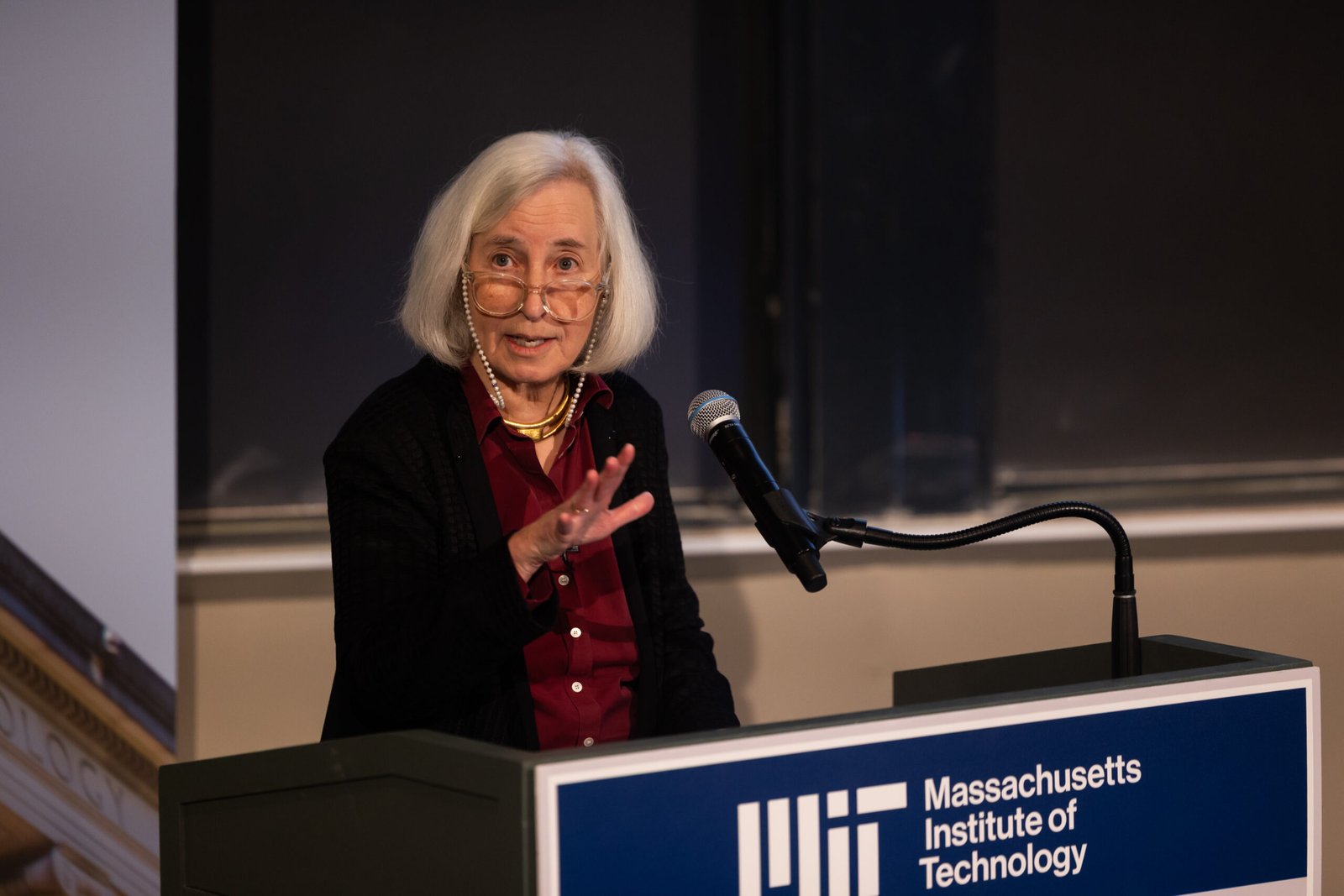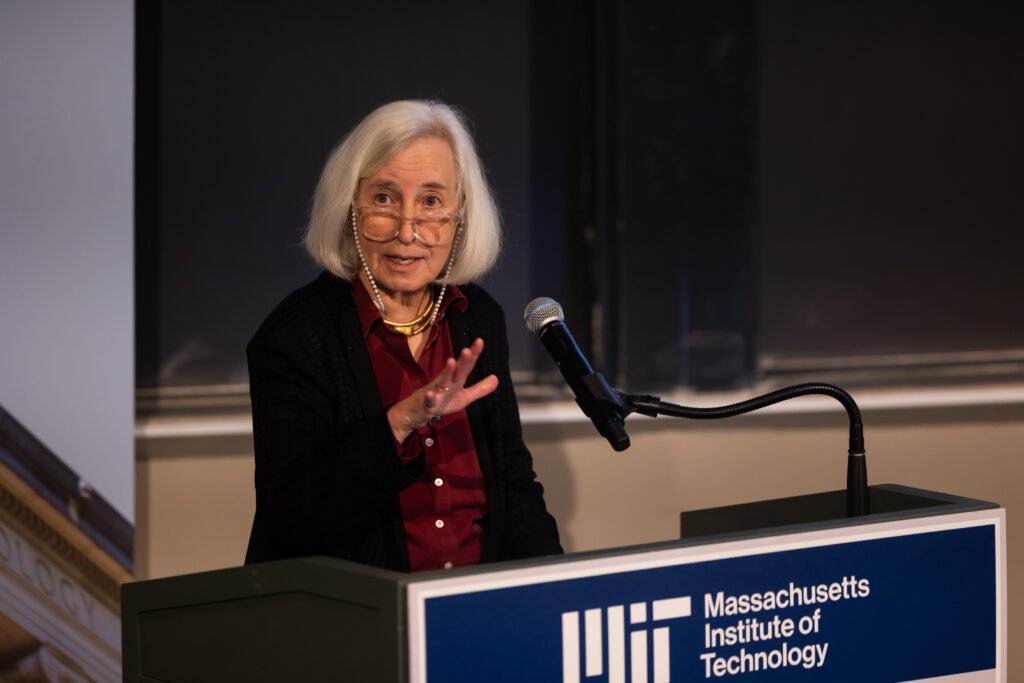

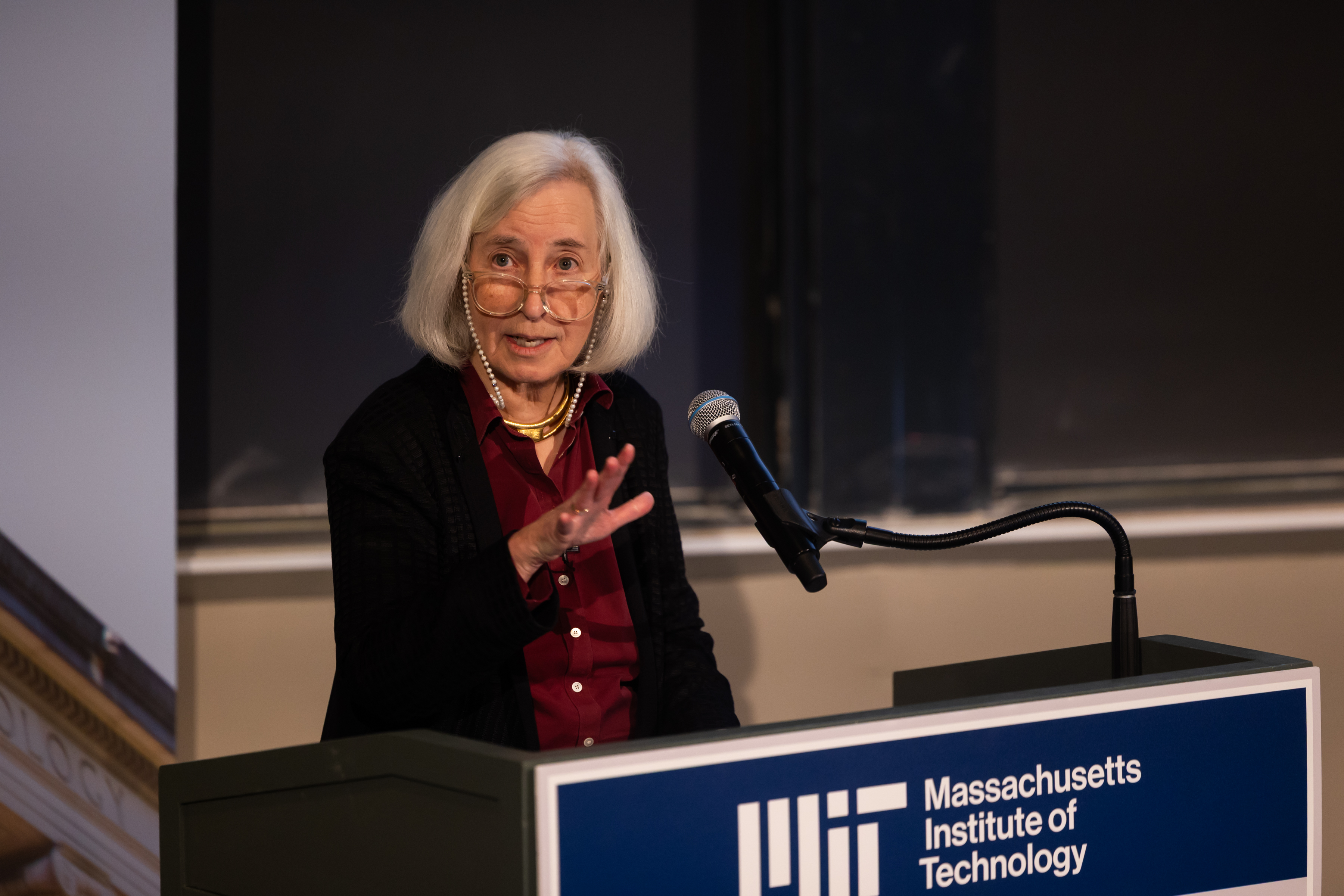
Authorized scholar Martha Minow delivered this fall’s Compton Lecture at MIT on Thursday, analyzing the civic foundations of democracy — and describing how synthetic intelligence is undermining it, however may very well be used to assist reinforce conventional U.S. governance.
“It’s not a superb time for democracy or constitutionalism,” mentioned Minow, who’s the three hundredth Anniversary College Professor at Harvard College, and a distinguished knowledgeable in constitutional regulation and human rights. She famous a litany of challenges to democracy lately, together with violations of legal guidelines and norms, the stifling of free speech, a diminution of congressional authority, disregard of authorized rulings, the widespread vilification of others in society, and extra.
Current Gallup polling, Minow noticed, reveals 77 p.c of individuals saying that the founders of the U.S. can be disillusioned within the up to date situation of the nation.
“Many individuals genuinely wonder if this nation’s system of presidency and rule of regulation, ignited 250 years in the past, will survive,” Minow mentioned.
Her remarks assessed the state of the U.S. when it comes to what she known as 4 key “components” of democracy: schooling, dependable and accessible data, safety from violence, and equity. Minow evaluated how AI has, amongst different issues, influenced these areas of life — but additionally advised methods folks might use up to date know-how to assist.
“It’s very acquainted to listen to blame attributed to digital applied sciences and consultants of all stripes, however a turnaround, I imagine, is genuinely potential if folks at MIT and elsewhere pour time and expertise in direction of actual and much-needed options,” Minow mentioned.
A considerable portion of her remarks targeted on the pitfalls of AI in schooling. That subject compounds another troubling developments: The U.S. already has giant native and regional disparities in academic funding, Minow famous, whereas faculties have truly develop into considerably extra segregated in financial and ethnic phrases during the last three a long time.
On this context, AI threatens to additional weaken independent-thinking expertise, Minow advised, simply when larger understanding of civic points is completely important.
“As AI surges, I feel we’ve got to be taught to be smarter about the best way to use it, the best way to regulate it, and the best way to truly educate folks in regards to the prices of senseless utilizing,” Minow mentioned. She added: “Dominant AI platforms supercharge the methods which are deployed by social media corporations, inducing passivity in folks … Main AI fashions and interfaces and sycophantic parts endanger the event significantly of younger folks’s capabilities to suppose, to recollect, and to have interaction in vital pondering.”
That pattern away from cognitive effort, she advised, could be modified — maybe by AI instruments that act extra like tutors and are designed to reinforce folks’s deep pondering.
“Current LLMs, mannequin coaching, and interface design can provide nudges and questions and hints somewhat than changing pupil work, however there’s a lot extra that may very well be developed, and extra successfully, to be reliable, and to deepen human actions and curiosity, somewhat than changing folks,” Minow mentioned.
To the viewers, she added, “AI instruments might do way more of that … And I imagine that you just, the folks right here, might develop higher instruments than those which are on the market. And make higher assessments, extra significant and cheating-resistant.”
Minow’s speak, “Constituting Democracy within the Period of AI,” was delivered to a big viewers in MIT’s Huntington Corridor, Room 10-250 on campus.
MIT President Sally A. Kornbluth delivered introductory remarks to the viewers. The Karl Taylor Compton Lecture Collection, launched in 1957, is the highest-profile occasion of its variety at MIT. Karl Taylor Compton was MIT’s ninth president, serving from 1930 to 1948, after which changing into chair of the MIT Company from 1948 to 1954.
“He guided MIT by the Nice Melancholy and World Conflict II,” Kornbluth mentioned, “remodeling the Institute from an excellent faculty for coaching job-ready engineers to an important world analysis college.”
She added: “He was additionally a deeply dedicated patriot who helped harness the mental energy of America’s analysis universities to serve the nation throughout World Conflict II.”
Kornbluth known as Minow “a authorized scholar of extraordinary mental scope,” and a “devoted educator whose work has formed how we take into consideration the regulation and our personal humanity, as people and as a society.”
Minow has been a school member at Harvard Regulation College since 1981, and served as dean of the college from 2009 by 2017. Minow earned her BA in historical past from the College of Michigan, an MA in schooling from Harvard, and a JD from Yale College.
Minow’s books embody “Making All of the Distinction” (1990), “Companions Not Rivals” (2002), and “When Ought to Regulation Forgive?” (2020).
In her speak, Minow additionally mentioned the civic results of misinformation, threats of violence, and a number of dimension of societal equity. Fashionable media know-how has led to a 75 p.c discount in journalists in current a long time, Minow noticed, with an attendant rise in corruption in locations with out native media. Civic-minded technologists, she proposed, ought to work in direction of establishing a widely-used “data commons,” or many types of them, to assist folks entry extra dependable data.
In the meantime, in the case of primary safety in society, Minow warned, “We’re on the brink proper now. I do know numerous judges, and each considered one of them has a reputable risk of violence in opposition to them. In America. This isn’t acceptable.”
For all of the challenges to democracy and conventional civic norms, nonetheless, Minow sounded constructive notes all through her remarks, mentioning that there are a lot of alternatives to create new types of dependable data, schooling, and neighborhood relations.
“We now have to really invent the world that we wish to dwell in,” she provided.
Minow’s remarks had been adopted by a Q&A session by which Kornbluth learn aloud questions submitted by the viewers — and requested her to characterize her issues about current developments.
“I fear in regards to the lack of the Enlightenment,” Minow mentioned. “I fear in regards to the lack of the idea that cause, and testing hypotheses, and rejecting myths within the face of proof, and the toleration and rights and enlargement of participation that got here together with the Enlightenment, that’s what issues me essentially the most. That’s why the disinformation subject for me is so necessary, that’s why the lack of vital pondering in faculties is so necessary.”
She added: “I’ve spent a lot of my very own profession enthusiastic about mass violence. What occurs when folks don’t perceive one another, and are afraid. And it’s horrible, and we don’t wish to be there. And I do view the Enlightenment as a time when folks realized that truly having mass wars is a nasty factor, and developing with toleration is an efficient factor, and testing our concepts in mild of proof different folks can share can produce a greater life for everyone. I fear we’re abandoning that proper now.”