
Discovering new molecules for particular makes use of is a serious driver of progress in all kinds of industries, whether or not it’s pharmaceutical firms searching for new medicine, or electronics or power firms searching for new supplies with specific properties. However it’s additionally largely a trial-and-error course of, as a result of there’s not but any approach to completely predict how a given chemical compound will behave when it comes to the myriad totally different properties and responses supplies can exhibit.
Current progress has been made on utilizing synthetic intelligence and machine studying to complement or velocity up laborious calculations primarily based on bodily rules that may at the very least present some preliminary steering on which compounds is perhaps value synthesizing and testing. Now, a brand new methodology developed at MIT exhibits that when there are few knowledge on some technologically related property, corresponding to ligand affinities for a just lately found mobile goal for a possible drug, this method can outperform different present strategies for winnowing down the sphere of attainable molecules that is perhaps value taking a look at.
The findings have been reported within the Sept. 14 challenge of the Journal of Chemical Data and Modeling, in a paper by MIT graduate scholar Akshat Shirish Zalte and up to date graduate Jackson Burns PhD ’26, Analysis Scientist Charlles Abreu, Professor William Inexperienced, and three researchers from the chemical firm BASF.
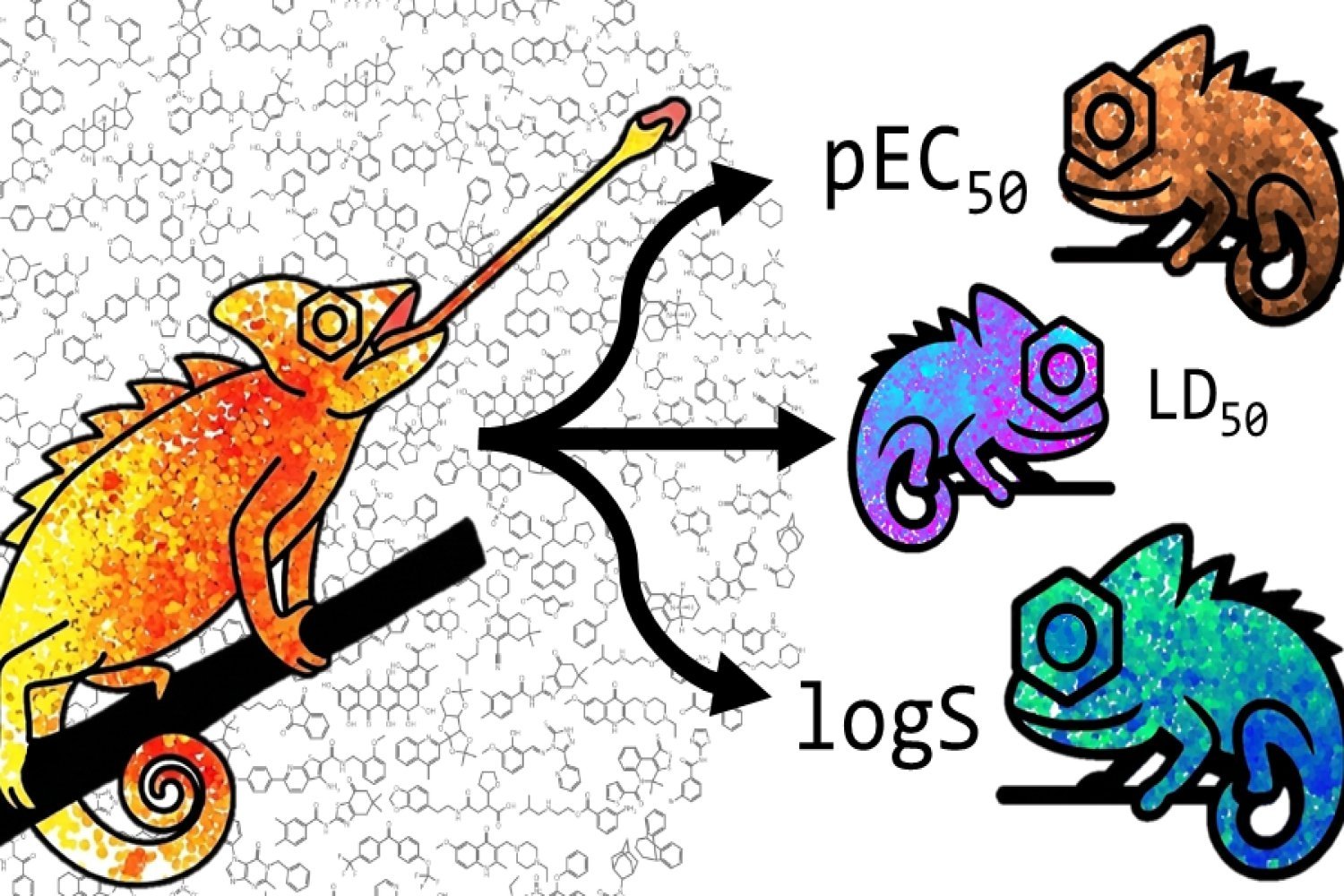
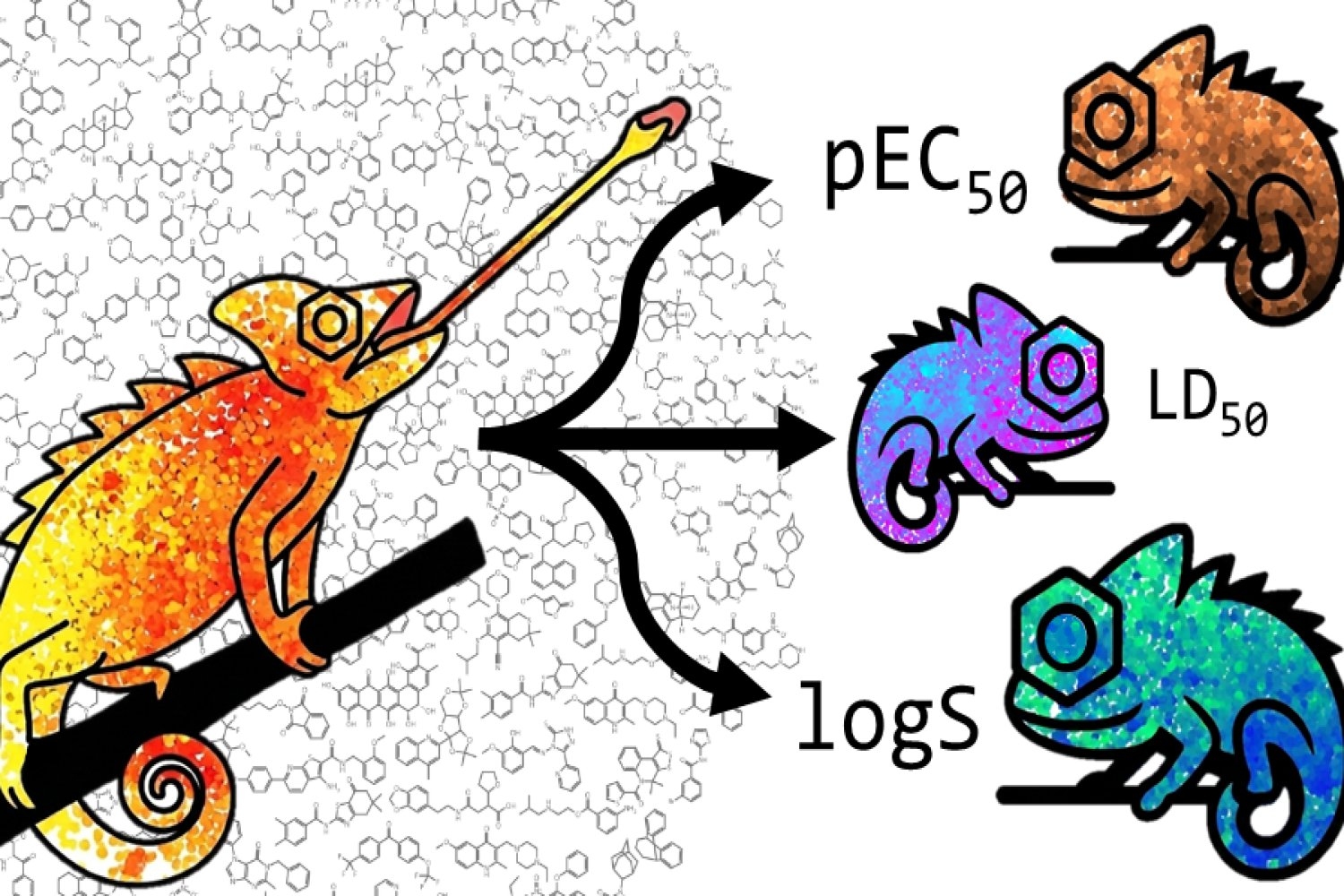
An earlier model of the paper has been on-line since final yr, and the open-source mannequin the workforce developed, referred to as CheMeleon, has already discovered common use by a number of pharmaceutical firms. CheMeleon was constructed utilizing ChemProp, an open-source machine-learning bundle additionally developed and maintained by the Inexperienced group at MIT, and anybody can obtain CheMeleon by way of ChemProp and fine-tune it for their very own functions.
Earlier this yr, there was a contest organized by OpenADMET for making an attempt to foretell the properties of a wide range of new molecules that had not beforehand been synthesized, says Inexperienced, who’s the Hoyt Hottel Professor of Chemical Engineering. “It was an enormous contest, lots of people participated,” he says. When the winners have been introduced, it turned out that 9 of the highest 20 entries had used CheMeleon of their course of. “So then we began getting all types of inquiries from the pharma firms about this, however our paper had simply been submitted; it wasn’t even peer-reviewed or something but.”
Whereas the paper went by way of that assessment course of, its affect was already spreading. A minimum of one pharma firm, Inexperienced says, “despatched a message to all their individuals, and mentioned ‘Anytime you’re modeling a property, begin with CheMeleon, that’s our new firm coverage’” when making preliminary selections about which molecules to pursue.
The important thing to CheMeleon was pre-training a machine-learning mannequin with detailed knowledge about 1,000,000 totally different molecules, in order that it will get to study correlations between the construction of a given molecule and the way it behaves with respect to a catalog of about 1,600 descriptors which have been developed by chemists over many years. CheMeleon can then be fine-tuned to foretell well-known properties like solubility and viscosity, to extra esoteric properties corresponding to bioactivity or reactivity, with a sure protein or enzyme.
These million molecules are a minuscule fraction of the innumerable ways in which atoms can bond collectively, however they supply sufficient examples so that when the AI system has been educated on them, it could actually work out by itself many underlying patterns and relationships, after which apply these to a brand new, unknown molecule that’s introduced to it.
“Most of right this moment’s deep-learning fashions require extra knowledge than conventional strategies,” says Zalte. Some profitable fashions use in depth knowledge from the printed literature in chemical journals, he says. “We don’t have a look at the literature in any respect. We simply calculate a bunch of molecular descriptors like molecular weight or variety of oxygens, amongst others.” Then predicting these descriptors varieties the premise for his or her pre-training process.
CheMeleon is a pre-trained basis mannequin. Impressed by the well-known basis fashions in language corresponding to ChatGPT and Claide, which basically are developed by feeding them huge quantities of knowledge from the web, CheMeleon makes use of molecular descriptors of 1,000,000 molecules from PubChem, a big, freely obtainable database of chemical data maintained by the U.S. Nationwide Institutes of Well being.
With classical expert-driven fashions, however, specialists in a discipline manually enter detailed information about their topic. In growing these classical fashions, he says, for instance, individuals know from experiments {that a} sure property of curiosity, say solubility, might relate to specific descriptors of the identical molecules, “like molecular weight, or the variety of oxygens which might be current, or how branchy or cumbersome the molecule is.”
With this workforce’s method, they’ll begin with an present neural community structure and prepare it to study underlying rules. “We’re not coaching it for a particular property, however as a common mannequin that understands some stage of chemistry, in order that even in the event you fine-tune it with only a few knowledge factors for the duty you care about, you possibly can nonetheless get some good efficiency,” he says. That’s due to the truth that the mannequin is “not having to study all the pieces from scratch.”
To confirm its usefulness, “We in contrast our mannequin not solely towards different basis fashions which might be on the market, but additionally with classical fashions leveraging expert-designed rules,” Zalte says. Evaluating its efficiency throughout 58 check instances, “we see that our mannequin comes out on high.”
Inexperienced provides, “The CheMeleon basis mannequin drastically reduces the variety of molecules that should be examined experimentally to precisely predict the properties of recent molecules. This can be a enormous benefit, since synthesizing and testing a lot of molecules is sluggish and costly.”
Moreover the MIT members, the workforce additionally included Jochen Sieg, Christian Feldmann, and Miriam Mathea, researchers at BASF SE in Germany. The work was supported by the Machine Studying for Pharmaceutical Discovery and Synthesis consortium, together with fellowship help from U.S. Division of Power and MathWorks.