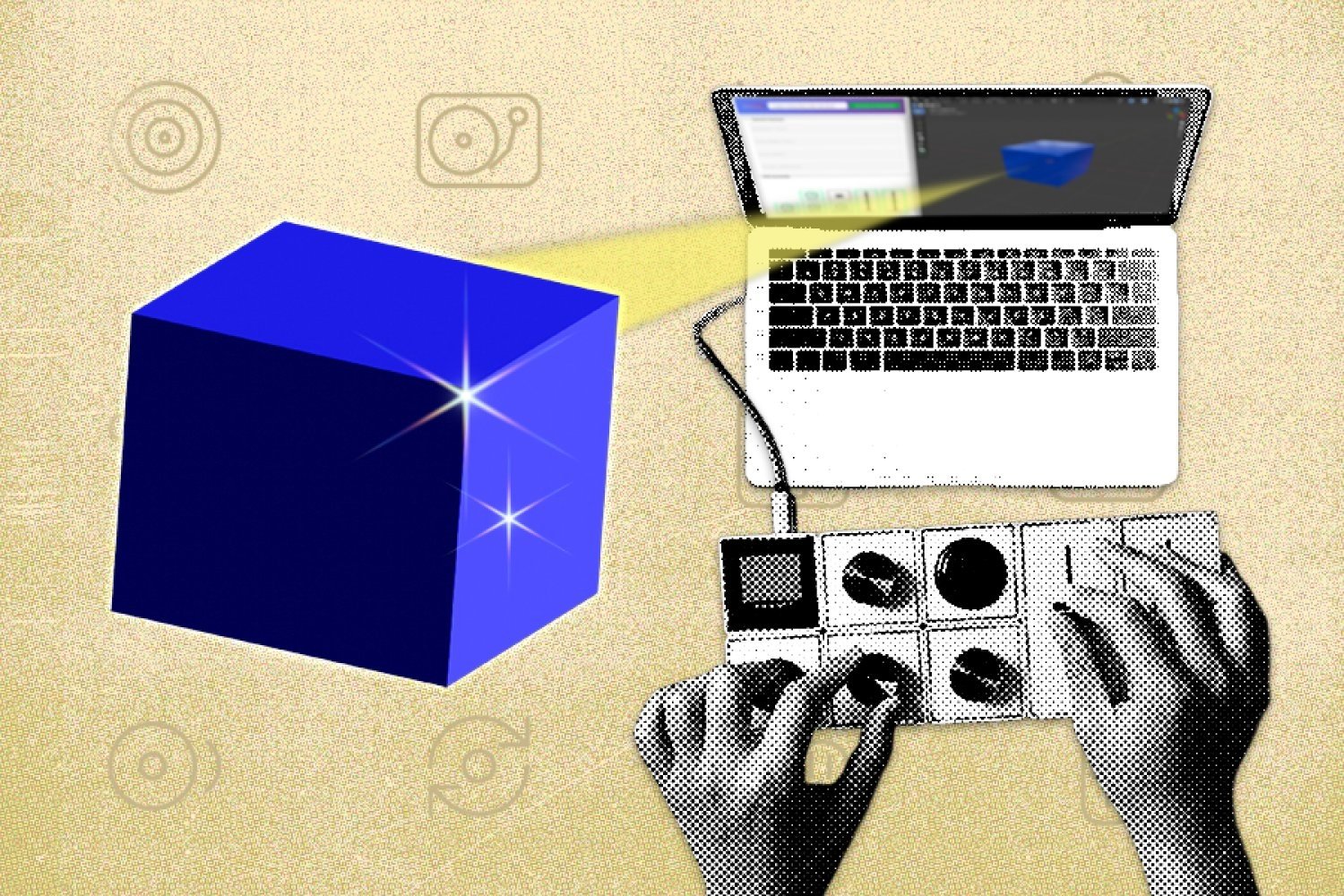

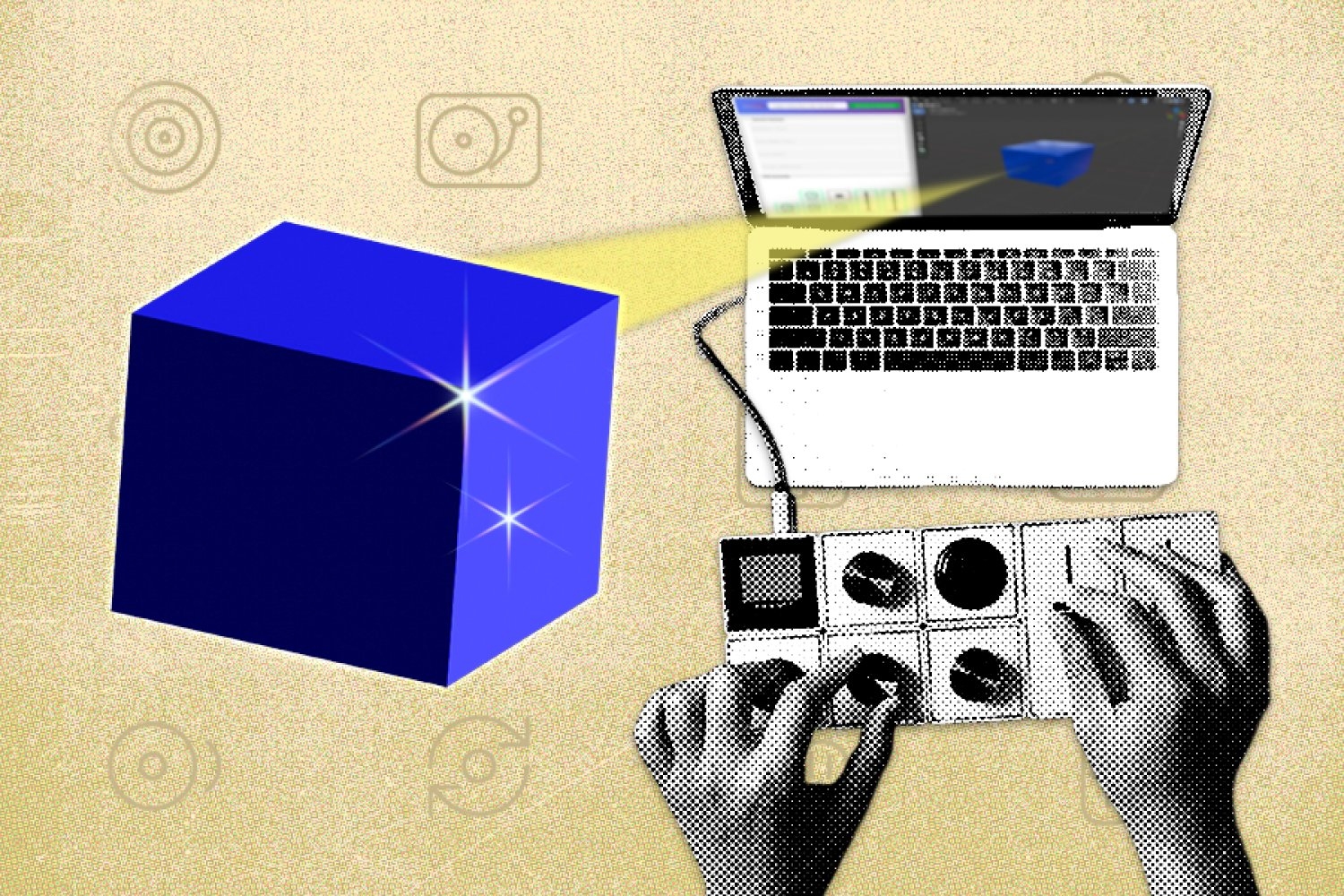
The system helped the researchers flip an ordinary mixer right into a photo-editing controller. That approach, they may modify shade in Adobe Lightroom, with a complementary visualization of these controls displayed on their display screen. The group did the identical with sound-mixing software program, in order that performers can modify their music in real-time with their very own inputs to knobs and faders.
The researchers additionally reprogrammed a less complicated mixer to work with the 3D modeling program Blender. Their interface included an space the place customers can kind in a immediate, and as soon as the mannequin was generated, customers may modify options like shininess on a mixer utilizing bodily controls. Inside Adobe’s Character Animator software program, TangiMap linked particular expressions and actions to buttons on a management pad so customers may animate (or “puppeteer”) a cartoon character stay.
Zhu and co-author Chang Xiao, an assistant professor at Boston College, offered their software on the ACM Symposium on Person Interface Software program and Know-how earlier this month.
Zhu and Xiao created a customized consumer interface (UI) for every software. Whereas that provides one other layer of personalization to the artistic course of, the group is hoping to create a extra streamlined system that helps the designer to generate the UI for his or her system by taking an image.
The researchers are additionally contemplating the bodily facets of consumer interactions. They wish to use extra ergonomic units and likewise make sure that TangiMap accounts for the place customers place their palms when doing totally different duties. For instance, customers sometimes maintain a mixer in another way after they’re utilizing it to make music than, say, when enjoying a online game. It’s your decision controls mapped nearer or additional aside, relying on what you’re doing.
Zhu is hoping to do a consumer examine to get extra suggestions about TangiMap, and whether or not this type of “good DJing” may certainly enhance these experiences. However the dynamic reprogramming she in the end envisions is much more bold.
“The identical approach our telephones and computer systems generalize to a variety of duties, we would like different objects to be extra clever,” she says. “I want to construct bodily gadgets that use an AI agent as a mind to resolve what to reprogram into. They might perceive what to remodel into, given a particular state of affairs.”
A chemical jar, for example, may let you know if it’s sealed appropriately when requested, and while you wish to see what it’s sometimes used for, the container would as a substitute show that info. Whereas that form of versatility and interactivity is a methods off, extra highly effective brokers and extra intricate fabrication pipelines may convey on a regular basis objects to life.
Their work was supported, partly, by Google’s Gemini Tutorial Program Award.