
Operating a contemporary analysis laboratory requires greater than sustaining refined devices. Researchers want to finish coaching, receive entry, schedule and function tools, navigate billing, and extra. For giant, shared amenities, coordinating these actions throughout tons of of devices and hundreds of customers could be a important endeavor. As analysis turns into more and more interdisciplinary, one other problem is rising: discovering the proper functionality within the first place.
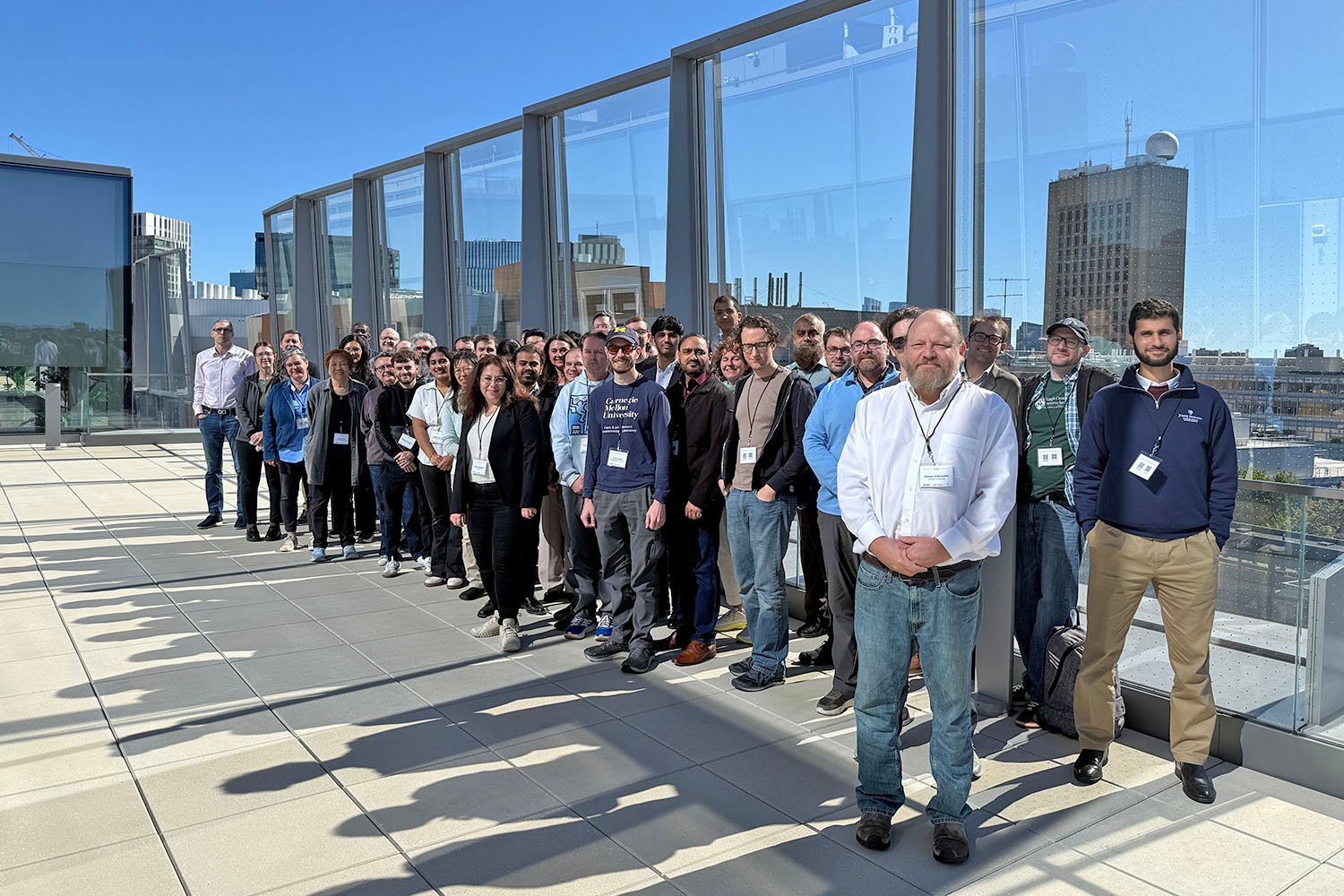
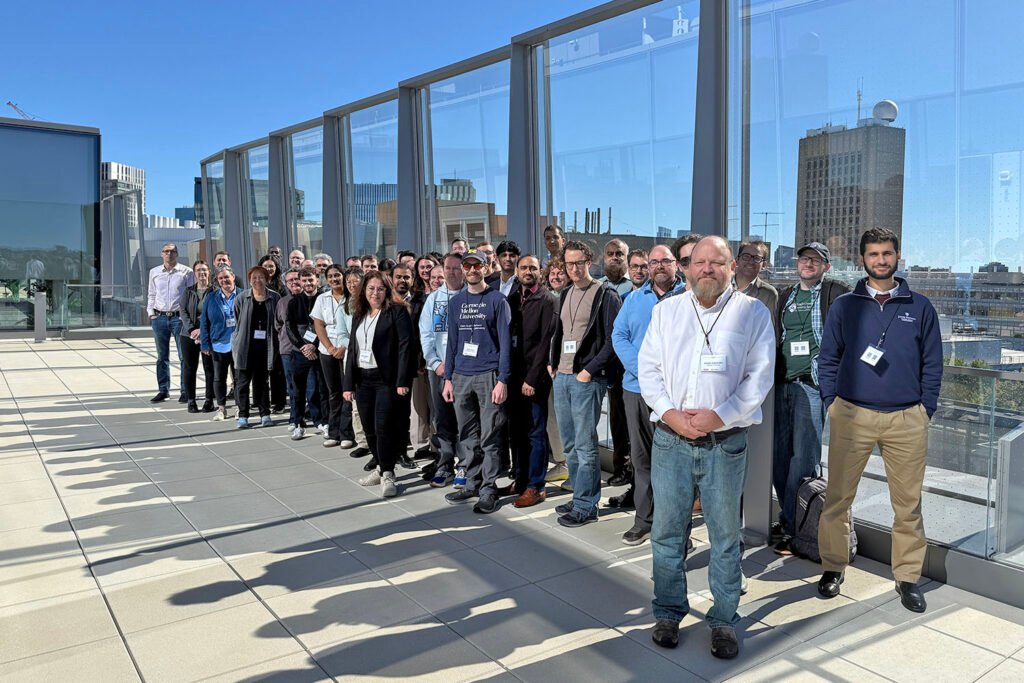
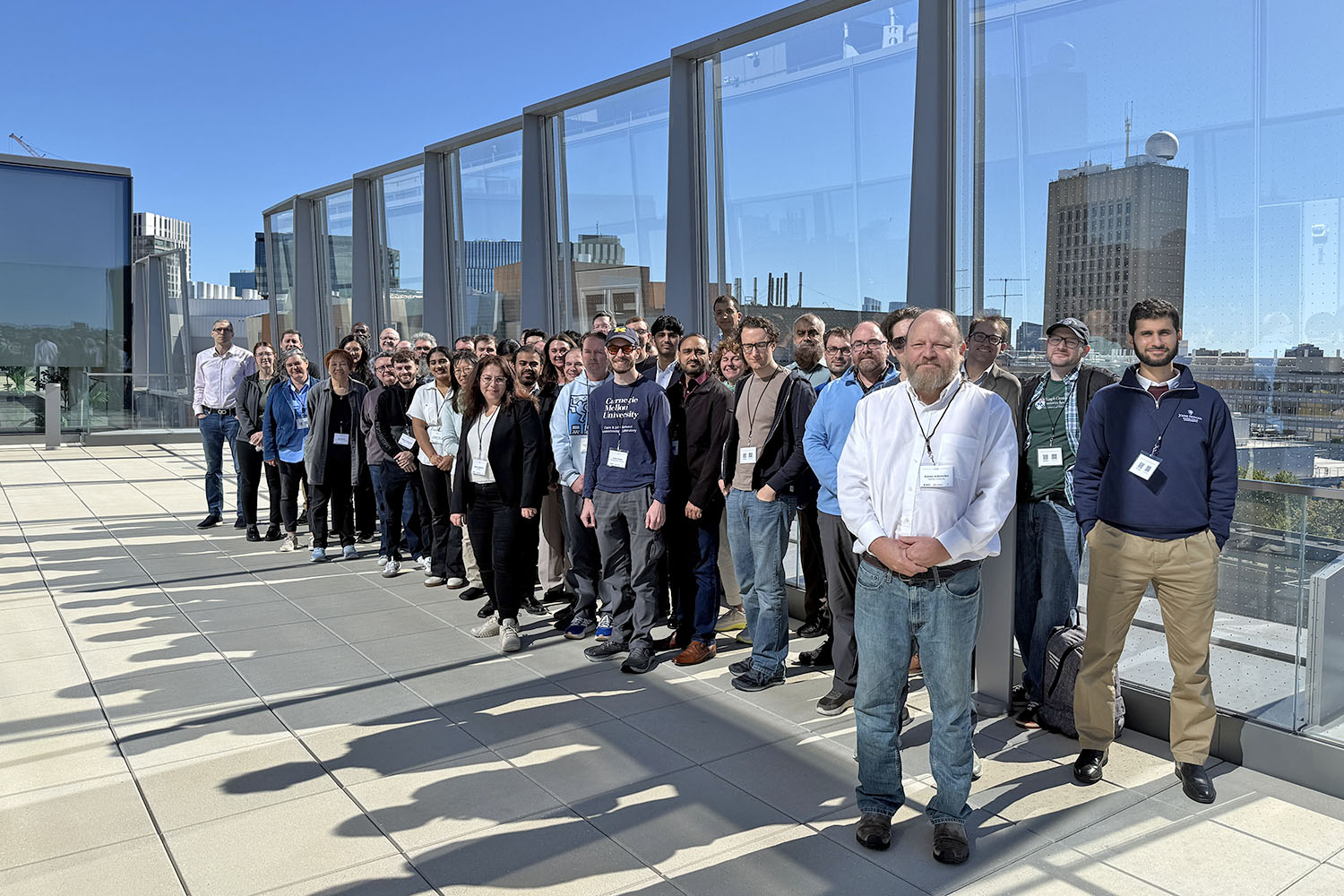
Addressing these challenges was a central theme of the 2026 NEMO Consumer Assembly, hosted by MIT.nano Oct. 5–6. The assembly introduced collectively 65 representatives from 25 laboratories and organizations, together with facility administrators, laboratory managers, technical workers, software program builders, trade representatives, and authorities researchers. Sponsored by the Northeast Microelectronics Coalition (NEMC) hub, the assembly centered on sharing approaches to lab administration and constructing connections amongst amenities.
On the heart of the assembly was the NanoFab Gear Administration and Operations (NEMO) system, an open-source platform that gives instruments for managing shared analysis amenities whereas permitting particular person laboratories to adapt the system to their very own wants. The assembly highlighted an necessary attribute of the NEMO group: The identical platform can serve a really various set of amenities, and whereas the size or the scientific missions of the amenities could differ, their core operational challenges are sometimes remarkably comparable.
For Anna Osherov, affiliate director of Characterization.nano and organizer of the assembly, the collaborative mannequin is likely one of the most compelling points of NEMO.
“Open supply adjustments the way in which we take into consideration expertise growth,” she says. “We are able to construct on what others have already developed, contribute enhancements again to the group, and collectively create a platform that’s extra succesful than what anyone facility might develop by itself.”
NEMO was initially launched as open-source software program by the Nationwide Institute of Requirements and Expertise (NIST) in 2018. Its group version (NEMO-CE), launched in 2023, permits amenities to develop and share extensions to the platform. On the October assembly, individuals from organizations together with MIT; Stanford, Columbia, and Princeton universities; the College of Pennsylvania; NIST; NASA’s Jet Propulsion Laboratory; and Atlantis Labs offered instruments to handle challenges starting from chemical administration and consumer administration to tools standing, coaching, and workflow automation.
The vary of displays illustrated how otherwise configured amenities are adapting a standard platform to their very own wants. Stanford, for instance, offered real-time shows for tools standing and reservations, whereas Columbia shared its expertise migrating to NEMO and increasing the system for billing and facility workflows. Princeton demonstrated automated course of charts for monitoring device efficiency, and the College of Pennsylvania offered approaches to chemical administration.
General, the tasks demonstrated the premise behind the NEMO group: an answer developed to handle an issue at one facility can turn into a useful resource for others.
“Collectively we are able to do far more than any considered one of us individually can,” mentioned Vladimir Bulović, director of MIT.nano, throughout his opening remarks. “NEMO is the platform that gave us, lastly, a streamlined method to take action.”
From particular person amenities to a related analysis ecosystem
Because the NEMO group grows, one other alternative emerges. Universities and analysis organizations function specialised amenities, every with distinctive tools, experience, and capabilities. However researchers can not use a functionality they’re unaware of or can not simply discover.
That is significantly necessary for microelectronics R&D, the place progress usually is dependent upon transferring shortly between specialised capabilities. A researcher might have fabrication at one facility, superior characterization at one other, specialised microscopy some place else, and a course of or evaluation functionality out there at solely a handful of establishments.
Discovering these capabilities, and figuring out the place and when they are often accessed, can itself turn into a bottleneck.Historically, networks of amenities have relied on static webpages or databases to explain out there assets. However as amenities evolve, this data can shortly turn into outdated.
On the assembly, MIT.nano offered Hydra, a brand new open-source platform being developed with help from NEMC as a key element of the NEMC Technical Concierge, a program that goals to assist researchers determine and entry specialised capabilities throughout a community of amenities. Hydra is designed to attach a number of NEMO installations and draw data instantly from the programs that amenities already use, fairly than requiring somebody to manually replace a separate database. The result’s a compilation constructed from the bottom truths of actively-used facility administration programs. “Hydra doesn’t change any lab administration system,” Osherov defined. “It connects, synchronizes, and retains information updated throughout all related programs in actual time.”
On this mannequin, NEMO supplies the operational supply of knowledge inside a person facility, whereas Hydra makes that data discoverable throughout amenities.
For a researcher, that would imply discovering a specialised functionality with out first needing to know which laboratory may need the related tools.
“The main focus is to make the distributed infrastructure supporting analysis extra discoverable and usable,” Osherov mentioned.
Constructing infrastructure that may change
The method displays a broader philosophy: Analysis infrastructure must evolve as analysis itself adjustments. “We have to construct a versatile analysis area and a community-oriented area so that folks really feel empowered to go to it, use it, after which redefine it because the years progress, adapting it to the wants of the subsequent technology of researchers,” mentioned Bulović.
That flexibility applies to operational programs in addition to bodily laboratories. New devices and analysis strategies emerge, consumer communities change, and amenities develop new necessities. An open-source platform permits particular person amenities to reply to these adjustments whereas offering a mechanism for enhancements to be shared.
At MIT.nano alone, NEMO helps greater than 1,600 lively researchers utilizing greater than 200 instruments, with roughly 160,000 hours of device utilization every year. For Jorg Scholvin, affiliate director of Fab.nano, working at that scale makes the effectivity of on a regular basis processes, and the power to adapt and alter shortly, necessary.
“A small enchancment in an administrative workflow may be multiplied throughout hundreds of customers and tens of hundreds of apparatus interactions,” he mentioned.
The NEMO wave
The sense of group and optimistic outlook for the way forward for shared amenities was obvious all through the two-day assembly. Closing discussions regarded forward to the function of knowledge integration, automation, and synthetic intelligence in lab operations.
“The group is taking up a lifetime of its personal,” mentioned Mathieu Rampant, CEO and co-founder of Atlantis Labs, describing a mannequin during which facility managers can share concepts and remedy issues collectively. “It’s extra sustainable,” he added as he talked about having to do much less because the NEMO-CE supervisor as a result of the amenities managers are speaking to one another — sharing concepts and fixing issues as a community: “the NEMO wave,” Samantha Roberts, director of the Metropolis College of New York nanofabrication facility, referred to as it. “Everyone seems to be invested in it and cares about it. It takes a whole lot of effort to alter your lab administration system and if we preserve this going, we are able to construct out one thing that’s actually cool and that works.”
For Osherov, the aim stays simple.
“Finally, that is about enabling analysis. The higher we are able to handle the operational facet of our amenities, the extra successfully we are able to make our devices, experience, and capabilities out there to the analysis group.”
In microelectronics, the place innovation more and more is dependent upon entry to specialised and distributed capabilities, that availability issues. The power to search out the proper functionality on the proper facility, utilizing data drawn instantly from actively used programs, might help researchers transfer extra shortly from an thought to an experiment to real-world software and influence.