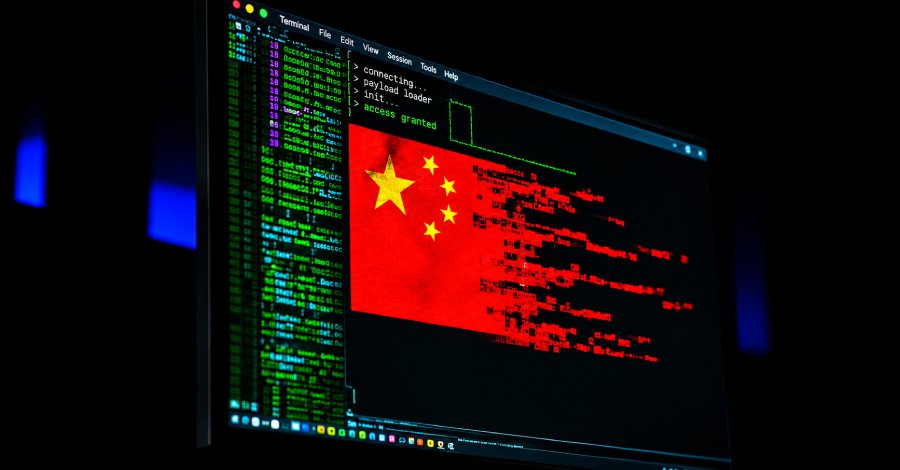


The suspected Chinese language superior persistent menace (APT) group behind the subtle EggStreme malware has rebuilt its toolkit because it continues to focus on authorities organizations within the Philippines.
“When attackers are uncovered, a budget response is to rotate,” Bitdefender stated in a technical report shared with The Hacker Information. “A file hash modifications with each recompile, a website prices a number of {dollars}, and a brand new IP handle prices much less.”
“The EggStreme operators did greater than rotate – the agent we now see makes use of a special community protocol, has an enhanced command set, and is available in a passive variant that by no means beacons out. The infrastructure seems to be shifting away from the one certificates authority that tied its older servers collectively.”
The tip result’s that the modifications enable it to bypass static signatures and heuristic detections constructed across the EggStreme malware framework when it was first uncovered in September 2025.
Delivered by way of an as-yet-unknown preliminary entry vector, EggStreme’s defining attribute is the usage of DLL sideloading to execute payloads. It options a number of elements as follows –
- EggStremeFuel (aka RawCookie), which conducts system profiling and deploys EggStremeLoader
- EggStremeLoader, which units up persistence and decrypts and executes EggStremeReflectiveLoader
- EggStremeReflectiveLoader, which executes EggStremeAgent
- EggStremeAgent (aka Gorem RAT), the core element and a full-featured backdoor that allows system reconnaissance, lateral motion, knowledge theft by way of an injected keylogger referred to as EggStremeKeylogger, and reverse shell and file add/obtain capabilities by way of a secondary backdoor referred to as EggStremeWizard
It is value noting that some elements of the framework, equivalent to EggStremeFuel and EggStremeLoader, have been put to make use of by one other cluster tracked by Palo Alto Networks as CL-STA-1048 between March and September 2025.

The newest findings from Bitdefender present a big retooling of EggStreme’s capabilities, together with eradicating the keylogger from each agent construct noticed since then. Inside two weeks after public disclosure, the menace actors are additionally stated to have made different modifications –
- The strategy EggStremeFuel makes use of to guard its configuration
- EggStremeLoader’s cryptography and payload format, shifting from RC4 to RC5 and to a customized cipher by the tip of October 2025
- Added instructions in EggStremeAgent that facilitate Energetic Listing reconnaissance, Home windows Administration Instrumentation (WMI) querying, TCP site visitors forwarding, and execution of PowerShell, Moveable Executable (PE), .NET meeting payloads
- Shifting from a single certificates authority to campaign-specific certificates authorities
As well as, the place lateral motion beforehand relied on Impacket-like tooling and on EggStremeAgent itself, newer incidents make use of an unmanaged system that sits exterior of the group’s endpoint administration however remains to be reachable by different workstations to stage the payloads and launch them by way of DLL sideloading utilizing a Visible Primary Script (VBScript) file remotely run over Server Message Block (SMB).
Among the newer builds have been discovered to run in passive mode by opening a listening port and ready for the operator to attach in versus contacting an exterior command-and-control (C2) server.
There may be additionally some proof that the attackers have additionally focused Taiwan, but it surely has been handled with low to medium confidence.
“The velocity of the loader modifications says as a lot concerning the operators’ maturity as about the price of publicity,” Bitdefender concluded. “The build-time design seems to be what makes rebuilds this quick. What they didn’t change is how they function: sideloaded DLLs beneath system library names, staging by means of file shares, working from reminiscence, and requiring mutual TLS.”
Mustang Panda Targets Philippine Authorities Utilizing ASEAN Summit Lures
As of late October 2026, Philippine authorities officers have additionally been focused by Mustang Panda, a prolific China-aligned cyber espionage group, utilizing ASEAN Summit lures to ship PlugX utilizing established ways like DLL sideloading.
 |
| Mustang Panda assault chain |
“The bundle impersonated a Laos–Philippines bilateral assembly agenda from the Lao Ministry of Overseas Affairs,” Dream Analysis Labs stated in a report printed final week.
“It named 5 officers and referenced believable diplomatic priorities, requesting that the reader present affirmation earlier than the summit. Behind it was a supply chain that put in PlugX remote-access malware whereas displaying the decoy agenda.”
Earth Alux Makes use of Stealthy Tradecraft to Strike Southeast Asia
The disclosure comes as a China-nexus menace actor tracked as Earth Alux (aka Ink Dragon, Jewelbug, REF7707, and UAT-11587) has been attributed to a recent set of assaults focusing on Southeast Asian authorities entities since at the very least July 2025. Palo Alto Networks Unit 42 has assigned the exercise the designation TGR-STA-0049 (previously CL-STA-0049).
“The defining signature of the menace actor behind the exercise is the focusing on of presidency entities, mixed with the usage of superior customized payloads which might be designed for high-stealth intelligence assortment operations, with an emphasis on evading safety detection instruments,” Unit 42 researcher Tom Fakterman stated.
Assaults mounted by the group have traditionally deployed a complicated backdoor referred to as FINALDRAFT (aka Squidoor) since 2023. Nevertheless, it has since expanded its malware arsenal to incorporate two beforehand undocumented distant entry trojans (RATs) referred to as PerfectPioneer RAT (in July 2025) and KUKURAT (in March 2026).
Preliminary entry to focus on networks is achieved by way of exploitation of susceptible, unpatched Microsoft Change servers to deploy internet shells like ASPXSpy and Godzilla, that are then used to deploy the RAT payloads. Alternatively, Earth Alux has leveraged phishing emails utilizing decoy PDFs and lookalike domains to compromise sufferer hosts.
PerfectPioneer RAT is a Go-based malware that is launched by way of three completely different strategies –
- DLL sideloading to launch a malicious DLL that reads, decrypts and executes XOR-encrypted shellcode containing the RAT
- Decoy installers for Palo Alto Networks GlobalProtect that installs the reputable program but in addition writes the malware to disk and executes it within the background
- Disguising executable recordsdata as PDF paperwork in phishing emails that, as soon as launched, opens a decoy PDF doc whereas the malware is launched within the background
The malware helps quite a few options that allow the operator to realize distant management of the contaminated host. It facilitates file operations, shell execution, course of administration, keylogging, SOCKS5 proxy, screenshot seize, Window enumeration and manipulation, and CPU and reminiscence utilization monitoring.
 |
| PerfectPioneer RAT execution chain |
It additionally ensures a connection to the C2 server stays energetic always and systematically cleans up momentary recordsdata and runs rubbish assortment if reminiscence utilization exceeds 100 MB to attenuate forensic traces.
Moreover, choose variants of the malware include an “isDangerousCommand” function to keep away from working administrative instructions that will be extremely damaging or noisy, thereby permitting it to be detected by safety packages put in on the host. These embrace rm, curl | bash, wget | bash, and powershell -e, amongst others.
KUKURAT, in distinction, capabilities as a modular implant that is executed in networks already compromised by PerfectPioneer RAT. Written in C++, the backdoor implements its performance as a separate DLL module that is loaded dynamically at runtime straight from the C2 server.
This permits the malware to be extremely evasive and adapt its capabilities on the fly in response to shifting operational targets. It helps the next options –
- Ship system data and obtain a configuration from the C2 server
- Take screenshots
- Log keystrokes
- Enumerate and terminate processes
- Carry out file operations
- Execute shell instructions by way of cmd.exe and PowerShell
- Conduct lateral motion by way of PsExec
- Perform SMB credential brute-forcing
- Run Beacon Object Information (BOF)
- Facilitate native privilege elevation
- Make sure the malware stays energetic by way of a standalone watchdog executable
What’s extra, KUKURAT initiates bogus, legitimate-looking exercise on the endpoint to camouflage and canopy up its tracks primarily based on a command issued by the menace actor. This consists of –
- Generate 10 decoy HTTP requests per operational cycle to randomly chosen domains which might be extracted from a hard-coded record of 15 in style web sites utilizing randomly generated URL paths with an intention to mix C2 communications
- Mimic reputable Google Chrome browser habits by writing random knowledge to the registry path HKCUSoftwareGoogleChromeBrowserCrashRecovery, studying the info again, and deleting the important thing
- Create momentary recordsdata with random names and randomized content material contained in the system %temp% listing, and delete them
“Each PerfectPioneer RAT and KUKURAT use HTTP/3 as the first technique for speaking with C2 infrastructure,” Unit 42 stated. “Whereas the adoption of HTTP/3 is uncommon throughout the broader malware panorama, its deployment on this marketing campaign displays an rising pattern amongst superior menace actors.”
The assaults have additionally been discovered to leverage established instruments like PsExec, WMI, and Home windows Distant Administration (WinRM) to maneuver laterally throughout compromised enterprise networks; acquire credentials utilizing Mimikatz, ProcDump, and SharpDPAPI; compromise Area Controllers to deploy KUKURAT on native endpoints; and exfiltrate delicate knowledge equivalent to recordsdata and emails.
“Via the deployment of KUKURAT and the PerfectPioneer RAT, the attackers behind this exercise are actively evolving to remain forward of conventional community defenses by implementing protocol-level evasion by way of HTTP/3 and QUIC over UDP,” Unit 42 concluded.
“What makes this group notably evasive is the in depth effort invested in sustaining operational safety and remaining hidden on compromised endpoints. The group demonstrates a mature understanding of contemporary defensive ecosystems. They’ve even gone as far as to embed hard-coded administrative security switches inside their binaries to stop their very own operators from working loud or damaging instructions which may set off safety alerts.”