

Warnings by a number one cryptographer that industry-wide public-key cryptography might fail due to advances in AI has sparked a debate within the safety neighborhood.
In a collection of publish on X, Johns Hopkins cryptographer Matthew Inexperienced warned that current public-key cryptography methods had been in danger as a result of machines have begun outperforming people of their capacity to deal with some mathematical issues.
“I believe there’s a 1% probability we dwell in Minicrypt, and a 15% probability we functionally lose confidence in our current public-key encryption algorithms,” Inexperienced wrote final month.
Inexperienced’s preliminary warning and follow-up feedback provided a warning concerning the cryptographic foundations beneath public key infrastructure (PKI), fairly than an obituary for PKI, the system of certificates, keys, and certificates authorities that secures Transport Layer Safety (TLS), code signing, and plenty of different info safety capabilities.
“I’m apprehensive about standardized public-key encryption (and a few signatures) and particularly the truth that most of it’s based mostly on a small variety of laborious issues,” Inexperienced added.
These laborious mathematical issues have been extensively analyzed by people for years however any comforting notion that this implies they’re secure is now being undermined as a result of machines have begun outperforming people in fixing some mathematical issues.
Inexperienced warns {that a} disruptive lack of confidence in web safety methods would come up if a serious cryptanalytic shock arrives sooner than requirements and deployments can adapt — so the {industry} must deal with improved cryptographic agility.
The feedback sparked a discussions on LinkedIn and elsewhere about how public-key crypto might fail. Inexperienced is but to answer CSO’s request for touch upon the talk he sparked.
Markku-Juhani O. Saarinen, a cryptographer and professor at Finland’s Tampere College who has appeared carefully at AI-powered crypto-analysis, informed CSO that he takes Inexperienced’s warning severely however urges warning, saying there isn’t a want to tear and substitute established {industry} cryptographic requirements.
“We actually can’t completely rule out surprises, however I’d additionally positively not advocate some hasty strikes, as a result of these are certain to trigger issues,” Saarinen mentioned. “Cryptography has good requirements, finest practices, and lively modernization paths (the ‘PQC transition’) — simply following these is probably the most smart method from info safety perspective.”
The mathematics at stake
Saarinen defined that there are two sorts of “laborious issues” in arithmetic:
- Numerical issues for which an answer is considered laborious to compute (for computer systems)
- Analytic issues which can be open and have been anticipated to be settled by a human with pencil and paper through a proof, counterexample, new concept, and so on.
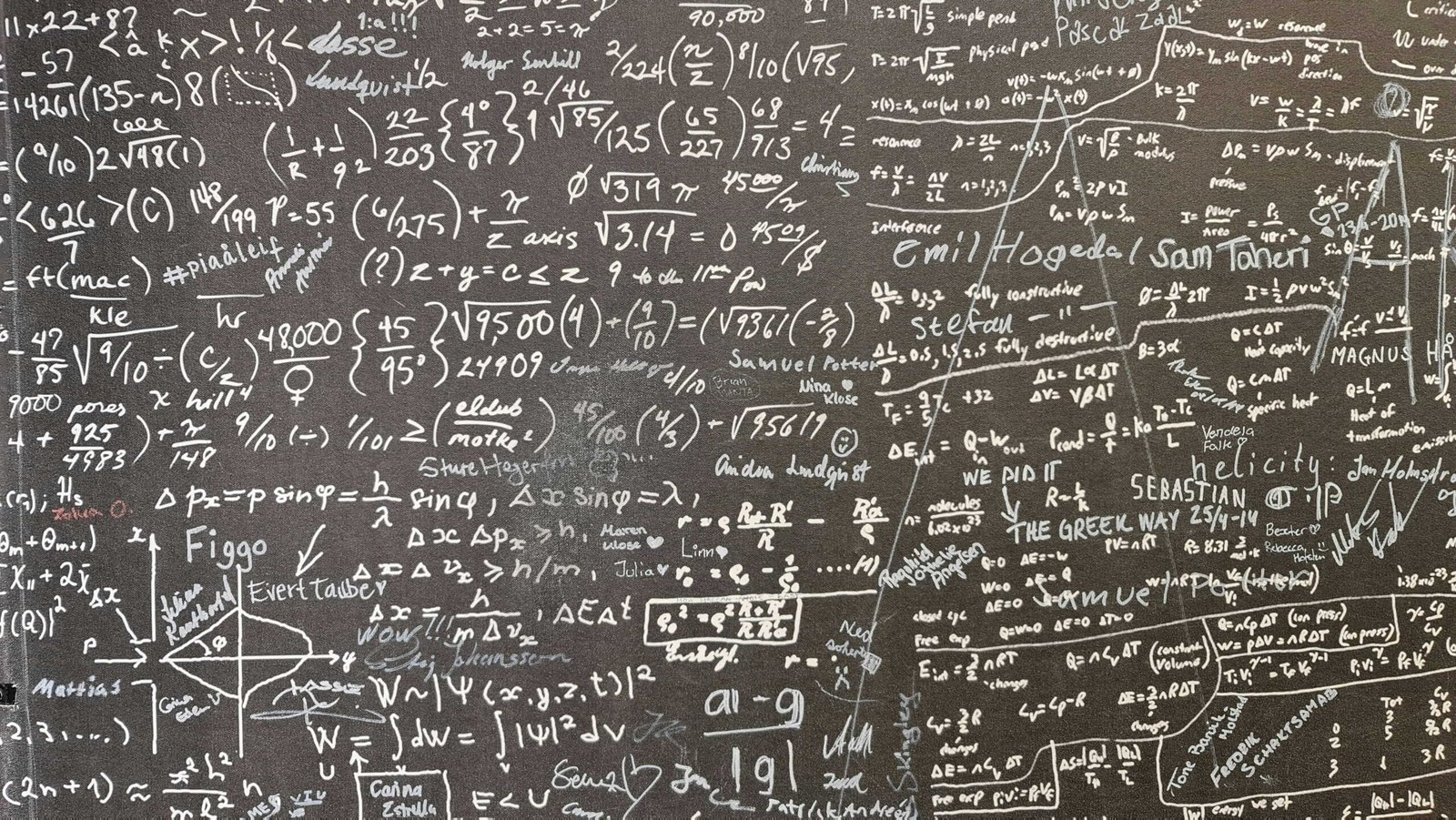
“What has occurred in 2026 is that arithmetic had its ‘Lee Sedol second’ (after the ‘final Go grandmaster’) and [analytical] issues beforehand considered within the human area (2) at the moment are being solved by computer systems,” Saarinen informed CSO.
Cryptography makes use of numerical issues in school — conventional ones like factoring the merchandise of huge prime numbers and discrete logarithm, and newer ones like studying with errors (LWE). Analyzing these algorithms and their complexity is a part of theoretical laptop science.
“The worry in cryptography is that AI will discover a shortcut for some laborious computational issues and make them straightforward,” Saarinen mentioned. “Whereas AI is excellent at optimizing computation, we don’t count on it to show all laborious computational issues into trivial ones.”
2026: Breaking HAWK and McEliece
Cryptographic issues involving set (1) above are usually “sub-exponential”; fixing them requires an nearly exponential variety of operations relative to the issue measurement or distance.
“A cryptographically related break may be exponential however would possibly halve the variety of bits; such an analytic break has occurred to some comparatively new schemes, akin to HAWK by AI in 2026, and to quite a few older proposals by people,” Saarinen defined.
AI additionally performed a major position find a major shortcut to the parameters of the McEliece cryptosystem (one of many earliest public-key schemes, designed in 1978).
“The German cyber company had been recommending a variant referred to as ‘Basic McEliece’ for quantum safety since 2020, however withdrew its suggestion on the finish of September,” Saarinen added.
Saarinen clarified that, in each instances, the schemes might nonetheless be “thought of safe if safety parameters had been adjusted, however that will have doubled public and secret keys, signatures, and ciphertexts.”
In the meantime, SA and Elliptic-Curve cryptosystems are already “damaged” from a computational-complexity viewpoint as a result of “polynomial-time quantum algorithms for them have been recognized since 1994, and constructing quantum computer systems is ‘simply an engineering downside,’” in accordance with Saarinen.
The principle post-quantum alternate options, ML-KEM, ML-DSA, and SLH-DSA, have acquired greater than a decade of intense evaluation.
In search of a ‘mathematical shortcut’
One other query that cryptographers are asking is whether or not public-key cryptography or symmetric cryptography is extra weak to AI cryptanalysis.
Saarinen urged a “mathematical shortcut” is extra prone to exist in public-key cryptography provided that it, by definition, requires mathematical construction for the “trapdoor” (a secret key that opens a public-key encrypted message or creates a signature that the general public key can confirm). “Symmetric-key cryptography (hashes and keyed ciphers) has merely extra design freedom on this sense,” Saarinen concluded.
Q-Day and LLMs
Professor Alan Woodward, a pc scientist on the College of Surrey, mentioned that LLMs are but to make an enormous dent on cryptography.
“We’ve seen some inroads and erosion of the safety ensures, however what’s truly occurring so far as I can see is that the LLMs are performing as an incredible software for mathematicians, cryptographers, and laptop scientists to hurry up their analysis: that leap of instinct wanted to seek out the deadly flaw nonetheless appears to wish people,” Prof. Woodward mentioned. “LLMs are very efficient at discovering flaws in these implementations fairly than the underlying arithmetic.”
Prof. Woodward in contrast the menace posed by AI in breaking encryption schemes to the hazard to legacy encryption schemes posed by quantum computer systems. Each issues spotlight the necessity for improved agility within the cryptographic schemes in use.
“We’ve already seen individuals migrating in preparation for ‘Q-Day’ so in some ways in which ought to already be addressing the dangers posed, in the event that they’re actual, by LLMs,” in accordance with Prof. Woodward, referring to the hypothetical future time when quantum computer systems are highly effective sufficient to interrupt public-key encryption. “The simplest route to this point appears to be a hybrid route the place now we have a mixture of cryptographic schemes that, while one or two would possibly fall away, leaves us with others we will depend on. Any discovered to be flawed for no matter purpose may be deprecated quickly and the intact schemes used as a substitute.”